


$12.8M
Pomona wrongful death settlement: a worker riding home in a company vehicle died when another driver rear-ended it on the 10 Freeway, leaving a spouse and four children.
Personal Injury
Did a driver’s negligence take the life of someone you love while they were walking? Wilshire Law Firm, an award-winning, nationally recognized team, helps California families pursue wrongful death claims with care and urgency. Want a free case review, available 24/7? There are no fees unless you get paid.
Explore essential resources on your rights, your options, and what to expect — everything you need to navigate the legal process, all in one place.
California law limits who may bring a wrongful death claim (Code Civ. Proc. §377.60). The surviving spouse or domestic partner, the children, and the issue of deceased children always have standing. If none survive, the people who would inherit under intestate succession may file, usually the parents, then siblings. Certain relatives who were financially dependent on the person who died, including a putative spouse, stepchildren, parents and household minors, may file regardless. California allows one wrongful death action per death, so every heir should be identified and joined at the outset. See our full guide to who can file a wrongful death claim in California.
Surviving families can generally recover both financial and personal losses: the lifetime financial support the person who died would have provided, the value of household services, funeral and burial expenses, and the loss of their love, companionship, comfort, care and guidance (Code Civ. Proc. §377.61). A separate survival action, brought by the estate, recovers the medical expenses and lost earnings the decedent incurred before death and any punitive damages the driver's conduct warrants (§377.34(a)). For actions filed on or after January 1, 2026, the survival action no longer includes the decedent's own pain and suffering; California allowed that only for filings between 2022 and 2025. Because every family's losses are different, a legal professional can review what your case may involve.
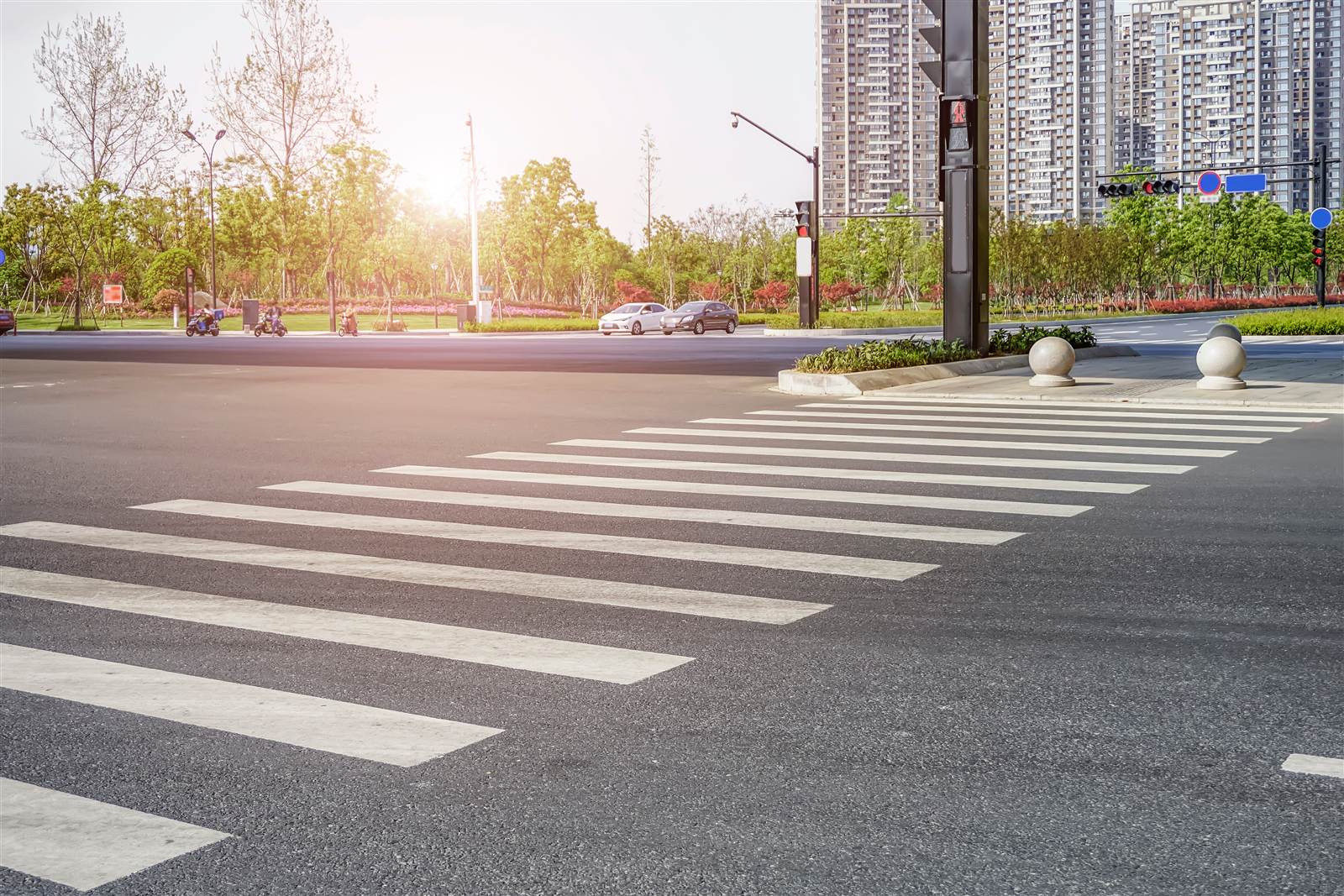
A driver is liable when their negligence caused the death. California Vehicle Code §21950 requires drivers to yield to pedestrians in marked and unmarked crosswalks and to slow or take other action to protect them; §21954 keeps the duty of due care in force even when a pedestrian crosses mid-block; §22350 forbids driving faster than is reasonable for conditions. The most common failures in fatal cases are speeding on arterial roads, turning without checking the crosswalk, distraction and impairment. If the pedestrian was partly at fault, the family's recovery is reduced by that percentage, not eliminated (Li v. Yellow Cab Co. (1975) 13 Cal.3d 804). When the crash happened at a location the city or Caltrans knew was dangerous, the agency may share liability, subject to the six-month claim rule.
Compensation may still be available when the driver flees. Leaving the scene of a fatal crash is a felony under Vehicle Code §20001, and police investigations often identify the driver through cameras, debris and body-shop reports. If the driver is never found or carried no insurance, uninsured motorist coverage on the decedent's own auto policy, or on the policy of a household family member, can provide a recovery, provided the crash was reported to police within 24 hours and to the insurer under oath within 30 days (Ins. Code §11580.2(b)). California's minimum liability coverage is only $30,000 per person and $60,000 per accident (Veh. Code §16056), so underinsured motorist coverage is often critical even when the driver is identified. A legal professional can review every available policy with you.
In most California wrongful death cases you have two years from the date of death to file a lawsuit (Code Civ. Proc. §335.1). If a government entity may be responsible, for a dangerous road, crossing or signal, or for a city, county, Caltrans or transit vehicle, a written government claim must be presented within six months of the death (Gov. Code §911.2) before any lawsuit. Evidence deadlines are shorter still: intersection camera footage is often overwritten within weeks. Because missing a deadline can end your case, it is best to speak with a legal professional early.
Nationally Recognized Powerhouse, Fighting for the Justice You Deserve
Our award-winning attorneys have recovered billions for clients while taking on insurance companies and major corporations.
1 of 13
 Colin M. Jones, Esq.Senior Partner and Senior Trial Attorney, Chair of the Personal Injury Litigation Department
 Jennifer P. Burkes, Esq.Senior Partner & Strategic Advisor, Personal Injury Litigation Department
 Mary Lee Caruso, Esq.Senior Partner
 Ryan Casey, Esq.Senior Partner and Trial Attorney
 Tae-Yoon Kim, Esq.Senior Partner
 Mike Wellen, Esq.Partner
 Philip Andonian, Esq.Partner and Trial Attorney
 Alivia E. Abreu, Esq.Partner
 Shervin G. Ghanoongooi, Esq.Partner
 Christopher Goodroe, Esq.Partner
 Nathan A. Guest, Esq.Partner and Trial Attorney
 Brian M. Jacobson, Esq.Partner
 Ariella Perry, Esq.Partner
1 of 12
$12.8M
Pomona wrongful death settlement: a worker riding home in a company vehicle died when another driver rear-ended it on the 10 Freeway, leaving a spouse and four children.
$10.3M
Los Angeles wrongful death settlement: a truck struck a motorcyclist who lost control on a lifted trench plate. The rider died, and the claims cited missing warning signs.
$9.1M
Pasadena wrongful death settlement: a company work truck turning left hit a pedestrian at high speed in a crosswalk. The pedestrian died.
$5.0M
Ontario wrongful death settlement: a commercial truck clipped a cyclist at a freeway exit. The rider hit his head in the fall and died about a week later.
$3.3M
Pasadena wrongful death settlement: a person died outside a convenience store, and the family brought claims. Defendants included the store chain and a security company.
$3.2M
Los Angeles wrongful death settlement: a produce delivery worker fell from atop pallets while unloading a truck into a warehouse cooler and died two days later.
$2.9M
Lompoc wrongful death settlement: a driver at a stop sign pulled into traffic without seeing a motorcyclist and struck the rider, who died at the scene.
$2.3M
Fresno County wrongful death settlement: a rental moving truck hit a driver head-on on a two-lane highway. The driver died within hours of the crash.
$2.3M
Los Angeles wrongful death settlement: loose sand collapsed on a worker digging an unprotected excavation at a jobsite. The worker died, leaving a spouse and two children.
$2.0M
Los Angeles wrongful death settlement: a person died inside a retail business, and the surviving family brought a wrongful death claim over the loss.
$400K
Santa Maria wrongful death settlement: a resident receiving post-acute care at a skilled nursing facility had serious medical complications and repeated hospital transfers before dying.
$267K
Los Angeles County wrongful death settlement: a vehicle struck a pedestrian, who suffered a serious head injury and other serious injuries, then died. The defendant was a public entity.
*Past results do not guarantee similar outcomes. Each case is unique and evaluated on its own facts.
Can We File a Claim If Our Loved One Was Partly at Fault?
Yes. California follows pure comparative negligence, so a family can recover even when the pedestrian shared fault, such as crossing outside a crosswalk; the recovery is reduced by the pedestrian's percentage of fault, not eliminated. Since 2023 the Freedom to Walk Act has also limited "jaywalking" enforcement to situations of immediate danger (Veh. Code §21955(b)), and the driver's duty of due care applies everywhere on the road (§21954(b)). Insurers often overstate a pedestrian's fault to reduce a payout; the evidence, from camera footage to reconstruction, usually tells a different story. A free case review with a legal professional, available 24/7, is the first step. There are no fees unless you get paid.
Send it to someone who could use it, or copy it into ChatGPT, Gemini or your notes.


We'll contact you within minutes
No fees unless you get paid.
Record-breaking results
Our attorneys have recovered billions of dollars, including some of the biggest settlements in California.
17#1 Settlements in California, 2022–2024*
TopVerdict #1TopVerdict.com #1 settlements
1 of 17
#1 Truck v. Pedestrian Accident Settlement
2024
#1 Multi-Vehicle Accident Settlement
2024
#1 Equipment Malfunction Settlement
2024
#1 Car v. Stationary Object Collision Settlement
2024
#1 Bus v. Passenger Accident Settlement
2024

#1 Whistleblower Retaliation Settlement
2023
#1 Underinsured Motorist Settlement
2023
#1 Slip & Fall Accident Settlement
2023

#1 Negligent Security Settlement
2023
#1 Ladder Accident Settlement
2023

#1 Hotel Premises Liability Settlement
2023
#1 Car v. Car Collision Settlement
2023
#1 Bicycle Accident Settlement
2023
#1 Pregnancy Discrimination Settlement
2022
#1 Age/Disability Discrimination Settlement
2022
#1 Wrongful Termination Settlement
2022
#1 Meal & Rest Breaks Settlement
2022
*#1 settlements in California have been awarded by TopVerdict.com. Past results do not guarantee similar outcomes.
Our Most Frequently Asked Questions
We've answered the most common ones below. If yours isn't here, call us — we're available 24/7.
The surviving spouse or domestic partner, the children, and the issue of deceased children may file; if none survive, the heirs who would inherit by intestate succession, usually the parents. Financially dependent putative spouses, stepchildren, parents and household minors may also qualify (Code Civ. Proc. §377.60). See our guide to who can file a wrongful death claim.
Yes. Drivers owe pedestrians due care everywhere on the road (Veh. Code §21954(b)), and California's pure comparative negligence rule reduces a recovery for shared fault rather than barring it. Since 2023, crossing outside a crosswalk is not even citable unless there was immediate danger (§21955(b)).
Potentially, if the city knew or should have known the location was dangerous and failed to fix it. A written claim must be presented to the city within six months of the death (Gov. Code §911.2) before any lawsuit.
The family may still recover through uninsured motorist coverage on the decedent's or a household member's auto policy, provided the crash was reported to police within 24 hours and to the insurer within 30 days (Ins. Code §11580.2). Fleeing a fatal crash is also a felony (Veh. Code §20001), and investigators identify many drivers through cameras and debris.
Two years from the date of death in most cases (Code Civ. Proc. §335.1); six months to present a claim against a public entity (Gov. Code §911.2).
Leaving the scene of a crash that causes death or permanent serious injury is a felony punishable by two to four years in state prison and a fine of $1,000 to $10,000 (Veh. Code §20001). The criminal case is separate from the family's civil claim, which does not depend on a conviction.
Not for the wrongful death claim, which the heirs bring in their own names. A survival action is brought by the personal representative, or by a successor in interest who files a declaration with a certified death certificate (Code Civ. Proc. §377.32).
Nothing up front. Wilshire Law Firm works on contingency, so there are no fees unless you get paid. Case reviews are free and available 24/7.
Locations
Find your nearest office — serving all of California and employment clients in Oregon and Washington.
Appointments required for office visitsCall 213-754-1375 to schedule