


$11.3M
Pomona truck accident settlement: a big rig hit a stopped vehicle on the freeway as a driver checked on it, causing serious head and leg injuries.
Personal Injury
Were you or someone you love hurt in a big rig crash? Wilshire Law Firm, an award-winning, nationally recognized team, helps Californians injured by 18-wheelers, semis and tractor-trailers pursue full compensation. Want a free case review with a legal professional, available 24/7? There are no fees unless you get paid.
Explore essential resources on your rights, your options, and what to expect — everything you need to navigate the legal process, all in one place.
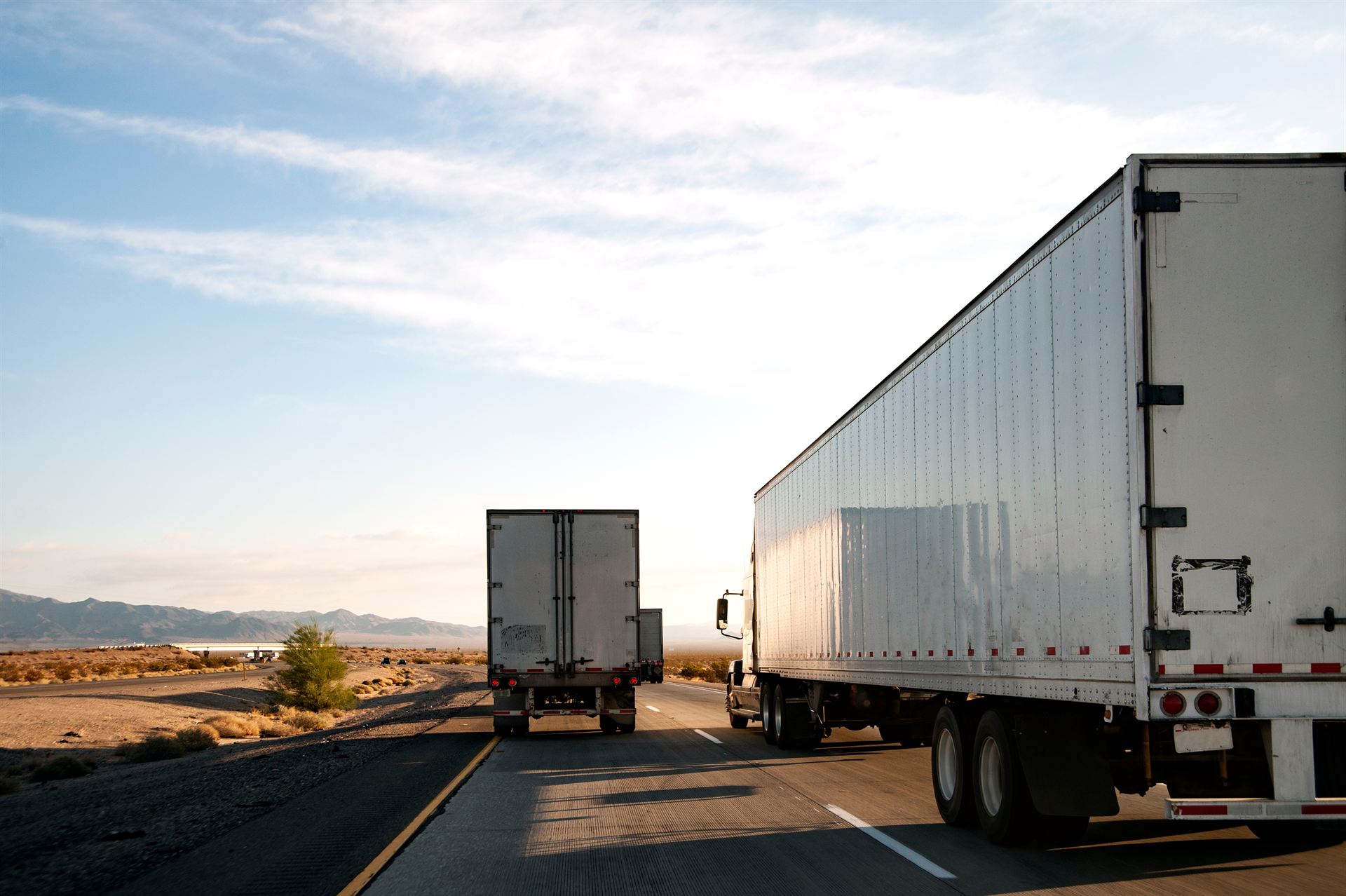
A big rig accident is a collision involving a heavy commercial truck such as an 18-wheeler, semi-truck or tractor-trailer, and the injuries are severe because of the sheer weight mismatch. Federal law allows a five-axle combination on the Interstate System to weigh up to 80,000 pounds (23 U.S.C. §127(a)), and California's weight table permits the same for qualifying configurations (Veh. Code §35551). A typical passenger car weighs roughly 4,000 pounds. When those two vehicles meet, the car's occupants absorb almost all of the force.
The national numbers reflect that imbalance. NHTSA reports that 5,472 people were killed in crashes involving large trucks in 2023, and 70 percent of them were occupants of other vehicles rather than the truck. Seventy-six percent of those fatal crashes happened on weekdays, when freight traffic is heaviest on corridors like the I-5, I-10, I-15 and I-710.
Under federal rules, "commercial motor vehicle" means any vehicle used in interstate commerce with a gross vehicle weight rating of 10,001 pounds or more (49 CFR §390.5). A loaded big rig sits at the extreme end of that category, and the crash forces scale with it.
Big rig accident injuries are concentrated in the categories that change a life permanently: traumatic brain injury, spinal cord damage, crush injuries, amputation, severe burns and wrongful death. The most common patterns we see in California big rig claims are:
Because these injuries usually mean surgery, rehabilitation and long-term care, the medical evidence has to be built carefully from the first week. We coordinate with treating physicians and, where needed, life-care planners so that future costs are documented, not guessed at.
Most big rig crashes trace back to a preventable failure by the driver, the carrier or the people who loaded and maintained the truck. The causes we investigate first are:
In a big rig accident, liability usually extends beyond the driver to the motor carrier and often to the broker, shipper, cargo loader or maintenance contractor. California's baseline rule is that everyone is responsible for injury caused by their want of ordinary care (Civ. Code §1714(a)). Layered on top of that:
California follows pure comparative negligence: if you were partly at fault, your recovery is reduced by your percentage of fault but not eliminated (Li v. Yellow Cab Co. (1975) 13 Cal.3d 804). Each defendant's share of non-economic damages is several, not joint (Civ. Code §1431.2), which is one reason identifying every responsible party matters.
The evidence that proves a big rig case is controlled by the trucking company, and the law lets them discard much of it within months, so a preservation demand should go out within days. The records we move to lock down include:
If a carrier destroys evidence after being told to keep it, the jury may be instructed that it can draw an adverse inference from the willful suppression of evidence (Evid. Code §413). That is a powerful position to be in, but only if the demand went out in time.
California law entitles an injured person to the amount that will compensate for all the detriment the crash caused (Civ. Code §3333), which in a big rig case typically includes both economic and non-economic damages:
One reason big rig cases differ from ordinary car crashes is the insurance behind them. A carrier hauling general freight in vehicles over 10,001 pounds must carry at least $750,000 in liability coverage, and hazardous-materials haulers must carry $1 million to $5 million (49 CFR §387.9). Compare that with California's minimum auto policy of $30,000 per person (Veh. Code §16056). The coverage to pay for catastrophic injuries usually exists; the fight is over proving what those injuries are worth.
In most cases you have two years from the date of injury to file a personal injury or wrongful death lawsuit (Code Civ. Proc. §335.1). Two exceptions shorten that dramatically:
Waiting to see how your injuries develop is understandable, but the investigation should not wait. A free case review with a legal professional costs nothing and starts the preservation clock in your favor.
Nationally Recognized Powerhouse, Fighting for the Justice You Deserve
Our award-winning attorneys have recovered billions for clients while taking on insurance companies and major corporations.
1 of 12
 Colin M. Jones, Esq.Senior Partner and Senior Trial Attorney, Chair of the Personal Injury Litigation Department
 Jennifer P. Burkes, Esq.Senior Partner & Strategic Advisor, Personal Injury Litigation Department
 Mary Lee Caruso, Esq.Senior Partner
 Ryan Casey, Esq.Senior Partner and Trial Attorney
 Tae-Yoon Kim, Esq.Senior Partner
 Philip Andonian, Esq.Partner and Trial Attorney
 Alivia E. Abreu, Esq.Partner
 Shervin G. Ghanoongooi, Esq.Partner
 Christopher Goodroe, Esq.Partner
 Nathan A. Guest, Esq.Partner and Trial Attorney
 Brian M. Jacobson, Esq.Partner
 Ariella Perry, Esq.Partner
1 of 36
$11.3M
Pomona truck accident settlement: a big rig hit a stopped vehicle on the freeway as a driver checked on it, causing serious head and leg injuries.
$11.0M
California truck accident settlement: a tow truck lost control, crossed three highway lanes and rear-ended a driver, causing a traumatic brain injury and other serious injuries.
$10.5M
Sonoma County truck accident settlement: a big rig rear-ended a driver, pushing the car into a second big rig and causing serious injuries.
$5.0M
San Diego County truck accident settlement: a car-carrier truck rear-ended a driver on Interstate 5 and pushed the car about half a mile, causing neck and back pain.
$3.5M
Riverside County truck accident settlement: a big rig carrying a sleeping occupant hit a semi whose trailer allegedly lacked working lights, causing serious neck and back injuries.
$3.0M
Hesperia truck accident settlement: a big rig and a car collided during a left turn, leaving an occupant of the car with head and arm injuries.
$3.0M
Los Angeles County truck accident settlement: a big rig rear-ended a stopped driver on the 405 and pushed the car into the vehicle ahead, causing head and leg injuries.
$3.0M
California truck accident settlement: a crane truck working on a highway pulled out and struck the rear of a work pickup, injuring a passenger's neck, back and arm.
$2.9M
Chula Vista truck accident settlement: a hydroplaning big rig sideswiped a vehicle and pushed it into a rail, leaving an occupant with neck, back, arm and hip pain.
$2.8M
Anaheim truck accident settlement: a big rig rear-ended a driver braking hard for a crash ahead on the 5 Freeway, causing neck and back pain and missed work.
$2.8M
Los Angeles truck accident settlement: a sleeping truck driver rear-ended a motorist at high speed on the 60 Freeway, worsening neck and back injuries from an earlier crash.
$2.8M
Poway truck accident settlement: a commercial delivery van turning left across traffic struck a family car, leaving an occupant with neck, upper back and lower back injuries.
$2.8M
California truck accident settlement: a box truck driver fell asleep and hit a lamp post and a building, leaving a passenger with burn injuries and a serious leg injury.
$2.6M
King City truck accident settlement: a big rig swerved on a two-lane road to miss a piece of metal and hit a driver head-on, causing serious injuries.
$2.6M
Hawthorne truck accident settlement: a speeding package-delivery truck rear-ended a driver waiting to turn right, causing neck, back and arm pain and aggravating an earlier arm condition.
$2.6M
Anaheim truck accident settlement: a package-delivery truck struck a driver pulling out of a parking lot, adding back and neck pain to an existing work injury.
$2.5M
Sacramento truck accident settlement: a hazardous-waste big rig merged into a rideshare driver's car on Highway 99, spinning it around and causing serious neck and back injuries.
$2.5M
Gardena truck accident settlement: a rear-end crash with a box truck sent a car occupant to the hospital with neck, leg and other injuries.
$2.4M
Hayward truck accident settlement: a big rig rear-ended a driver stopped at a red light and totaled the car, causing a serious neck injury and severe back pain.
$2.3M
Stockton truck accident settlement: a big rig set off a three-vehicle rear-end crash that struck a pickup, leaving its driver with neck and leg pain.
$2.3M
California truck accident settlement: a lawn-service truck broadsided a pickup, leaving the pickup's driver with arm and back injuries, dizziness and trouble speaking.
$2.3M
California truck accident settlement: a rear-end crash between two semis left a truck occupant with a traumatic head injury and a neck strain.
$2.3M
Merced County truck accident settlement: a big rig's trailer rear-ended a driver stopped in traffic near Interstate 5. The driver reported head pain right after the crash.
$2.0M
Kern County truck accident settlement: a weaving big rig sideswiped a driver on Interstate 5, overturning the car and causing serious back and other injuries.
$2.0M
Orange County truck accident settlement: a big rig driver crashed while avoiding people from an earlier wreck, suffering a brain injury. Defendants included an individual and a restaurant franchise.
$2.0M
California truck accident settlement: an out-of-control tow truck rear-ended a big rig, causing major damage and leaving the rig's driver with back and neck pain.
$2.0M
California truck accident settlement: a truck rear-ended a car traveling straight ahead, and its driver had neck and back pain with nausea and dizziness.
$1.8M
East Los Angeles truck accident settlement: a flatbed truck avoiding traffic on the 60 Freeway swerved into a car, leaving an occupant with neck, back and hip pain.
$1.5M
Hesperia truck accident settlement: a big rig ran a red light and struck a turning driver head-on, causing neck and back injuries.
$1.0M
Kern County truck accident settlement: a big rig coming off the 5 Freeway failed to stop and collided with a driver, causing serious leg injuries.
$990K
Bakersfield truck accident settlement: a big rig rear-ended and side-struck a driver's vehicle at a red light, causing a brain injury and serious neck and other injuries.
$840K
Los Angeles truck accident settlement: a big rig rushing a turn hit and dragged a stopped car, leaving its driver with leg pain, shock and anxiety.
$625K
Visalia truck accident settlement: a big rig unable to complete a turn at a four-way stop reversed into a car, leaving its driver with a soft-tissue neck strain.
$530K
Imperial County truck accident settlement: a commercial work truck speeding against traffic on a residential street struck a car, leaving its driver with neck and upper back pain.
$365K
Los Angeles County truck accident settlement: a big rig sideswiped a driver on the 10 Freeway, forcing the car into the wall and causing neck and upper back soreness.
$263K
Los Angeles County truck accident settlement: a freight carrier's vehicle reversed into a driver leaving a parking spot, causing a serious injury as well as neck and back pain.
*Past results do not guarantee similar outcomes. Each case is unique and evaluated on its own facts.
How Do I Know If I Have a Big Rig Accident Claim in California?
You likely have a big rig accident claim if you were injured in a collision with a commercial truck and someone else's carelessness contributed to it, even partially. Under California's pure comparative negligence rule, being partly at fault reduces your recovery but does not bar it. The strongest claims show a violation of a specific trucking rule, such as hours-of-service limits, the 55 mph truck speed limit or maintenance requirements, because that violation can create a presumption of negligence. Because the trucking company's records can be discarded within months, the best time to have a legal professional review your case is now. Wilshire Law Firm offers free case reviews 24/7, and there are no fees unless you get paid.


We'll contact you within minutes
No fees unless you get paid.
Record-breaking results
Our attorneys have recovered billions of dollars, including some of the biggest settlements in California.
17#1 Settlements in California, 2022–2024*
TopVerdict #1TopVerdict.com #1 settlements
1 of 17
#1 Truck v. Pedestrian Accident Settlement
2024
#1 Multi-Vehicle Accident Settlement
2024

#1 Equipment Malfunction Settlement
2024

#1 Car v. Stationary Object Collision Settlement
2024
#1 Bus v. Passenger Accident Settlement
2024

#1 Whistleblower Retaliation Settlement
2023

#1 Underinsured Motorist Settlement
2023

#1 Slip & Fall Accident Settlement
2023

#1 Negligent Security Settlement
2023

#1 Ladder Accident Settlement
2023

#1 Hotel Premises Liability Settlement
2023

#1 Car v. Car Collision Settlement
2023

#1 Bicycle Accident Settlement
2023

#1 Pregnancy Discrimination Settlement
2022

#1 Age/Disability Discrimination Settlement
2022

#1 Wrongful Termination Settlement
2022

#1 Meal & Rest Breaks Settlement
2022
*#1 settlements in California have been awarded by TopVerdict.com. Past results do not guarantee similar outcomes.
Our Most Frequently Asked Questions
We've answered the most common ones below. If yours isn't here, call us — we're available 24/7.
They are the same vehicle described three ways. "Big rig" is the everyday California term for a tractor-trailer combination; "18-wheeler" counts the wheels on a standard five-axle rig; "semi" refers to the semitrailer, which has no front axle and rests on the tractor. Legally, all of them are commercial motor vehicles subject to federal trucking regulations.
There is no standard number. Value depends on the severity and permanence of the injuries, the cost of future care, lost income, the strength of the liability evidence and the insurance available. Because federal law requires most carriers to carry at least $750,000 in coverage, big rig cases are often worth pursuing fully even when a passenger-car policy would have been exhausted.
In most cases you can pursue both. The carrier is generally responsible for its driver's negligence on the job, federal rules treat owner-operators as employees while they are driving, and the carrier has its own duties to hire qualified drivers and maintain its trucks.
You can still bring the claim in California. Interstate carriers operating here are subject to federal safety rules and to California courts for crashes that happen on California roads.
Not before you have spoken with a legal professional. Adjusters for commercial carriers begin building the company's defense the day of the crash, and recorded statements are frequently used to argue that your injuries are less serious than they are.
Get medical care even if you feel fine, keep every record, photograph your injuries and vehicle, avoid posting about the crash, and have a legal professional send the carrier a preservation demand for its logs, black-box data and inspection records before they can be discarded.
Yes. We represent people injured in big rig crashes throughout California, including the Inland Empire logistics corridor, the Central Valley and the Bay Area, from offices in Los Angeles, Beverly Hills, Torrance, Irvine, Riverside, Oakland, Sacramento and San Diego.
Nothing up front. Wilshire Law Firm handles big rig accident cases on a contingency basis, so there are no fees unless you get paid. Your case review with a legal professional is free, and we are available 24/7.
Locations
Find your nearest office — serving all of California and employment clients in Oregon and Washington.
Appointments required for office visitsCall 213-754-1375 to schedule